

In our Changemakers We Admire series, we highlight partners planting seeds of transformation in their communities. Each month, we ask the same three questions to a community member to explore what drives their work, what might surprise us, and the future they’re helping cultivate. This month, we’re spotlighting Maddie Booth, a sustainability educator, workforce strategist, and champion of “squiggly” climate careers. Through her work helping people navigate career transitions and find their place in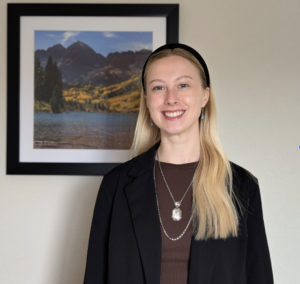 the green economy, Maddie is making climate and impact work more accessible for aspiring and experienced professionals alike. Maddie will also lead our June Resource Deep Dive, Squiggly Careers in Climate: Finding Your Path in the Green Economy.
- What drives your work in this community?
I spent a long time not being able to see how my own dots connected. I went to university without a roadmap or a network, I literally submitted a university application a few days before the deadline, not knowing what I wanted to study and not having anyone in my family that had been to university before either. It was honestly an overwhelming experience for me! I went to university in the UK, so at 18 you’re forced to choose what you want to study and commit to it for the next three years. There was a brand new course that launched one year prior to me applying that was in global sustainable development, but at the time I didn’t even know what sustainability meant. I was just a kid who was quietly furious about the state of the world and had no real idea what to do with that feeling.
What followed was wonderfully messy, starting my first company while still a student at university – a circular cosmetics brand than once graduating, a sip and paint company and somehow in between managing sustainability at a college. Eventually becoming National Head of Education for Sustainable Development across the UK’s further education system, and then doing global learning design at the Science Based Targets initiative. Three countries. Multiple sectors. A career that only really makes sense in hindsight.
What kept showing up in all of it, and what drives me every single day, is the same pattern: the gap between climate ambition and climate action is almost always a people problem. Organisations set bold targets. Then nobody has the skills, the culture, or the internal capacity to actually deliver them. That’s what I work on. And along the way I try to bring people with me, especially the ones who can’t yet see how their dots connect or don’t have the privilege of a network yet to lean on!
- What’s one surprising thing people might not know about you or your work?
I have got most of my job opportunities through a LinkedIn message. No job ad, no recruiter, no introduction. I just noticed an organisation doing genuinely important work at the crossroads of everything I care about entrepreneurship, climate, the next generation, and I sent a note. Whether you love or hate LinkedIn, I can’t explain to people how important it is to build up your network, your personal brand, and show up! You never know when you will need to lean on your network. I think I’m constantly aware, having been made redundant from a job before, of how important it is to make yourself not subject to the ups and downs of our economy and especially our climate work, and to try to weave your own path and always be open to new opportunities! I think one of the most important things in this journey is making sure to give back. At any stage, if there are people that I can connect up, or I see an organisation in need of somebody and I know a good person to recommend, really kind of putting those connecting dots together.
Oh, and I’m neurodivergent. That probably explains a lot, including why I became a chronic learner and networker, and why I care so deeply about making these spaces accessible for people who didn’t have the obvious blueprint going in.
- If you could plant one seed for the future, what would it be?
That everyone has a role in the climate transition. And that the path in doesn’t need to be straight, credentialled, or pre-approved. I want to be the person who tells the first-generation professional that yes, your background counts. Supporting the career-changer to show them that the skills they’ve spent ten years building are exactly what’s needed.